
January 26, 2026 //
Chana Masala Recipe

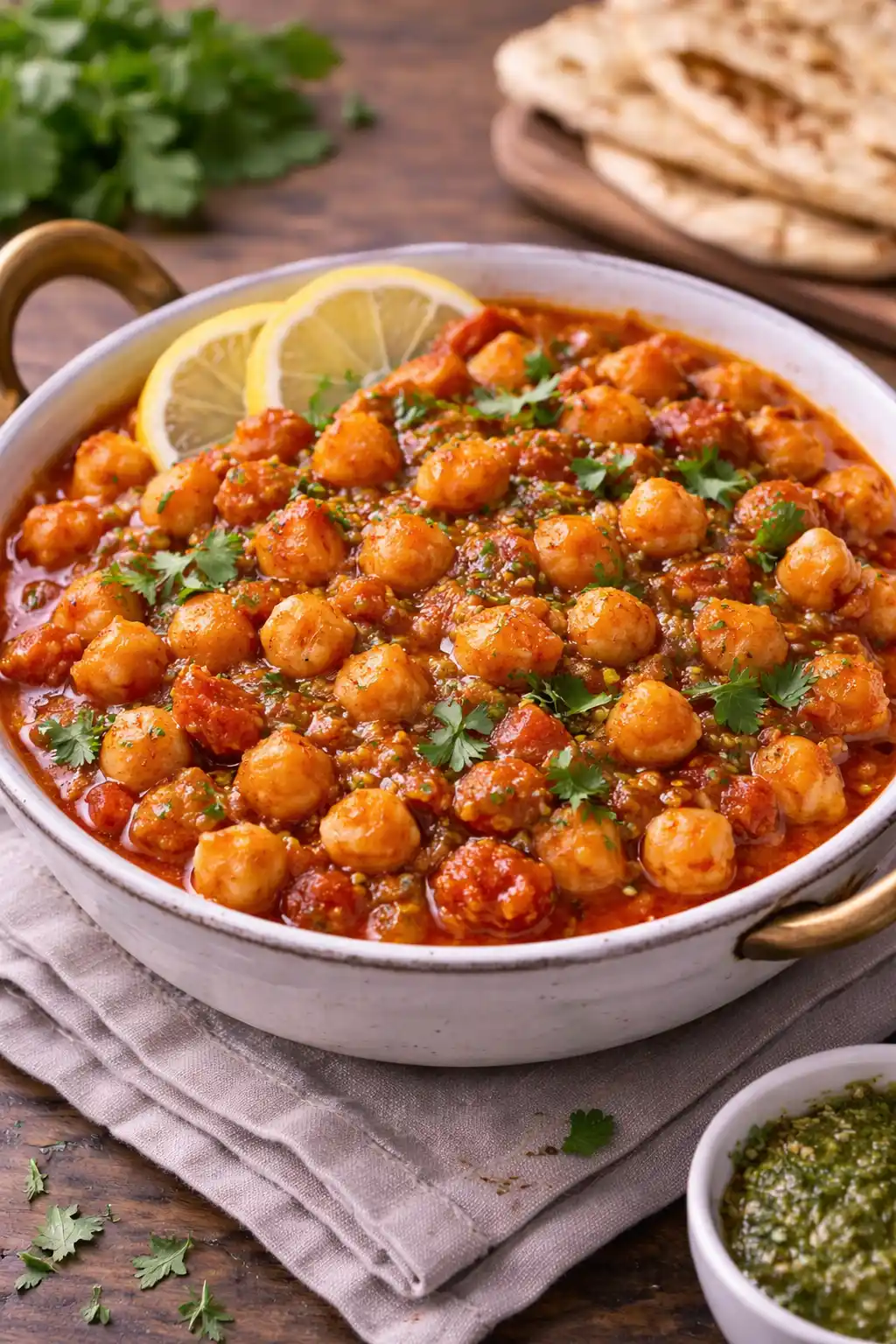
I've already told you that my grandchildren have opened the doors to cuisines around the world for me. Chana Masala was another one of those discoveries at Gandhi Restaurant. The first time I ordered it, I was hesitant: "Chickpeas with spices? I make them with chorizo and blood sausage." But they insisted: "Grandpa, trust me."
The dish arrived, and oh my goodness. Those chickpeas were swimming in a thick, orange sauce with an aroma I couldn't quite place. I took the first bite and couldn't help but smile. From that day on, I resolved to learn the original chana masala recipe. It took me a while to get the spices just right, but after asking around and making adjustments, I perfected a chana masala that I now make at home to impress everyone.
The great thing about this dish is that it originated in Indian food stalls. It's one of those stews that's filling without breaking the bank. Chickpeas, which we eat in soups here, are transformed there with tomatoes, onions, and that spice blend they call masala. Plus, it's vegan, although I didn't know what that meant. My vegetarian granddaughter was thrilled.
It's traditionally eaten with basmati rice or naan bread. At my house, we serve it with white rice and a little yogurt. And always, always, with bread on the side for dipping, because the sauce is sinful.
Chana Masala Receta Original (4 people)
Diners
4 raciones
Preparation
60m
Cooked
30m
Total Time
1h 30m
Utensils
Chana masala Ingredients
For the chickpeas:
For the Masala (spice sauce):
Essential spices:
Recipe steps
1
Prepare the chickpeas (if using dried)
Soak the dried chickpeas in plenty of water with the baking soda for at least 8 hours (overnight). Drain and rinse. In a pot of fresh water, add the tea bag and simmer over medium-low heat for 1-1.5 hours, or until very tender. Drain and discard the tea bag. Reserve one cup of the cooking water. (If using canned chickpeas, drain and rinse them.)
2
Prepare the base of the sauce (Masala)
Heat the oil or ghee in a pan over medium heat. Add the cumin and coriander seeds and the bay leaves. Let them sizzle for about 30 seconds until fragrant.
Add the chopped onion and sauté, stirring occasionally, for 10-12 minutes until golden brown and caramelized. This step is key to the flavor.
Add the garlic, ginger, and chili. Sauté for 2 more minutes until the raw smell is gone.
Stir in the chopped tomatoes, turmeric, and a pinch of salt. Cook over medium heat, stirring, until the tomatoes break down and the oil begins to separate from the mixture (about 8-10 minutes).
3
Combine and simmer
If you want a smoother sauce, blend this mixture with a little water until it forms a purée. Return it to the pan.
Add the cooked (or canned) chickpeas and enough of the reserved cooking water (or regular water) to cover them. Bring to a boil, then reduce heat, cover, and simmer for 20-25 minutes to allow the flavors to meld.
4
The final touch of spices
Add the garam masala, dried mango powder (amchur), and paprika. Stir well and cook uncovered for another 5 minutes. Taste and adjust the salt and spiciness.
Finally, sprinkle generously with chopped fresh cilantro.
5
Serve
Serve hot, accompanied by white basmati rice, naan, or chapati. Garnish with raw onion slices, lemon, and raita (yogurt with mint).
Key tips for success with the recipe
Don't skimp on the onion and tomato sofrito. The foundation of the flavor (masala) is built here. It's crucial to sauté the onion over medium heat until it's well browned and caramelized, not just translucent. Then, the tomatoes should be cooked long enough for them to break down and the oil to separate from the mixture. This technique, called "bhunnao," concentrates the flavors and prevents a raw aftertaste.
Toast the spices dry or in oil. To release all their essential oil and aroma, it's important to toast whole spices (cumin, coriander) in hot oil for 30 seconds before adding the onion. If you're using powdered spices like garam masala, add them at the end of cooking, stirring them in the hot oil for 1-2 minutes before adding liquid, to enhance their flavor without making them bitter.
Control the acidity and body of the sauce. Dried mango powder (amchur) is the traditional ingredient that provides the characteristic acidity. If you can't find it, fresh lemon juice is an excellent substitute, but always add it at the end of cooking to preserve its freshness. For a thicker, richer sauce, you can lightly crush some chickpeas with the back of a spoon against the side of the pot.
Soaking and slow cooking make all the difference. If you're using dried chickpeas, prolonged soaking with a little baking soda is key to tenderness. Cooking them with a tea leaf or bag gives them their traditional dark brown color. The final simmer (about 20 minutes) after combining them with the sauce allows the chickpeas to deeply absorb all the flavors.
With this, you now have a Chana Masala just like the one I discovered at Gandhi that day. Don't be intimidated by the spices; I was a bit lost at first too. The important thing is to keep experimenting, adjusting, and finding your own perfect blend.
All that's left is to serve it hot, with rice or bread, and enjoy it in good company. At my house, when I put it on the table, there's always someone who asks, "Grandpa, what's this?" And I answer, "Chickpeas, but not like your grandma's." Then they try it and are left with that surprised look on their faces.
Now it's your turn. Did you try it? Did you get the spices just right, or did you have to adjust them? The first time I made it, I added too much cumin, and it tasted like I was eating dirt, but I learned my lesson. Did you serve it with rice, bread, or both? Did you add yogurt to cool it down?
Leave me a comment sharing your experience, your tips, and even your photos if you'd like. You know I love hearing about cooking in other people's homes. And if you enjoyed the recipe, please share it with anyone you think deserves to discover that chickpeas can also be a culinary journey to India.

I grew up watching the wooden spoon being moved in steaming pots, learning that good things take time and that the secret of a good dish lies in the love with which it is prepared.
Antonio Ruiz
Las Recetas del abuelo




Don't miss any recipes!
Join thousands of grandpa's recipes subscribers and receive our best recipes every week!
Leave a Reply