
February 1, 2026 //
Chickpea hummus Recipe

I didn't know about hummus until a few years ago. My daughter, who lives in Madrid, became vegetarian and one day came home with a jar. "Dad, try this," she said. I looked at that chickpea paste with a blank expression, unsure what to expect. I gave her some bread, dipped it in, tasted it… and was amazed. I found it hard to believe that ordinary chickpeas could be transformed into something so smooth.
Since then, I've been determined to find the chickpea hummus recipe I like best. And after a few trials, I perfected my own easy chickpea hummus recipe that I now make for summer dinners, when friends come over, and when my grandchildren want a snack.
The beauty of hummus is that it seems like a luxury, but it's made with just four things: chickpeas, tahini (sesame paste), lemon, garlic, and cumin. The first time I made it, it was too thick, but I added a little of the chickpea cooking water, and it transformed into that smooth, silky cream. Now I serve it with a drizzle of olive oil, paprika, and warm bread for dipping. And it's always a hit.
Hummus original recipe (6-8 people)
Diners
6 - 8 raciones
Preparation
15m
Cooked
1h
Total Time
1h 15m
Utensils
Hummus Ingredients
The base:
Sesame paste (Tahini):
To serve (traditional):
Paso a paso
1
Prepare the chickpeas (if using dried, plan ahead)
Soak the dried chickpeas in cold water with a teaspoon of baking soda for 12 hours. Drain and rinse.
Cook them in a pot with fresh water and a little more baking soda (this helps soften the skins) for 1-1.5 hours, until very tender, almost falling apart. Drain, but reserve the cooking water. Let cool slightly.
(If using canned chickpeas, drain them well and reserve the liquid.)
2
Peel the chickpeas (the secret to EXTREME creaminess - optional but recommended)
If you're looking for an exceptionally silky texture, take the cooked chickpeas and, using your fingers, peel off the thin skin covering them. It's a bit tedious, but the result is worth it.
3
Crush the base
In a food processor, combine the chickpeas (skinned, if applicable), garlic cloves, cumin, and salt. Blend until you have a thick, grainy paste. Scrape down the sides of the bowl with a spatula.
4
Emulsify with tahini and lemon
Add the tahini and lemon juice. Blend again. The mixture will thicken considerably (this is normal).
With the blender running, begin adding the cooking water (or aquafaba) slowly, in a thin stream, until you reach the desired consistency. You may need between 50 and 100 ml.
Process for 3-5 minutes at a leisurely pace. The blending time is key to properly breaking down the particles and emulsifying, resulting in a white, airy, and ultra-smooth cream.
5
Rest and adjust
Taste and adjust: Does it need more salt? More lemon? More garlic? The balance is a matter of personal preference. Transfer the hummus to a bowl, cover with plastic wrap (pressing it directly onto the surface), and let it rest in the refrigerator for at least 30 minutes to allow the flavors to meld.
6
Serving (the final ritual)
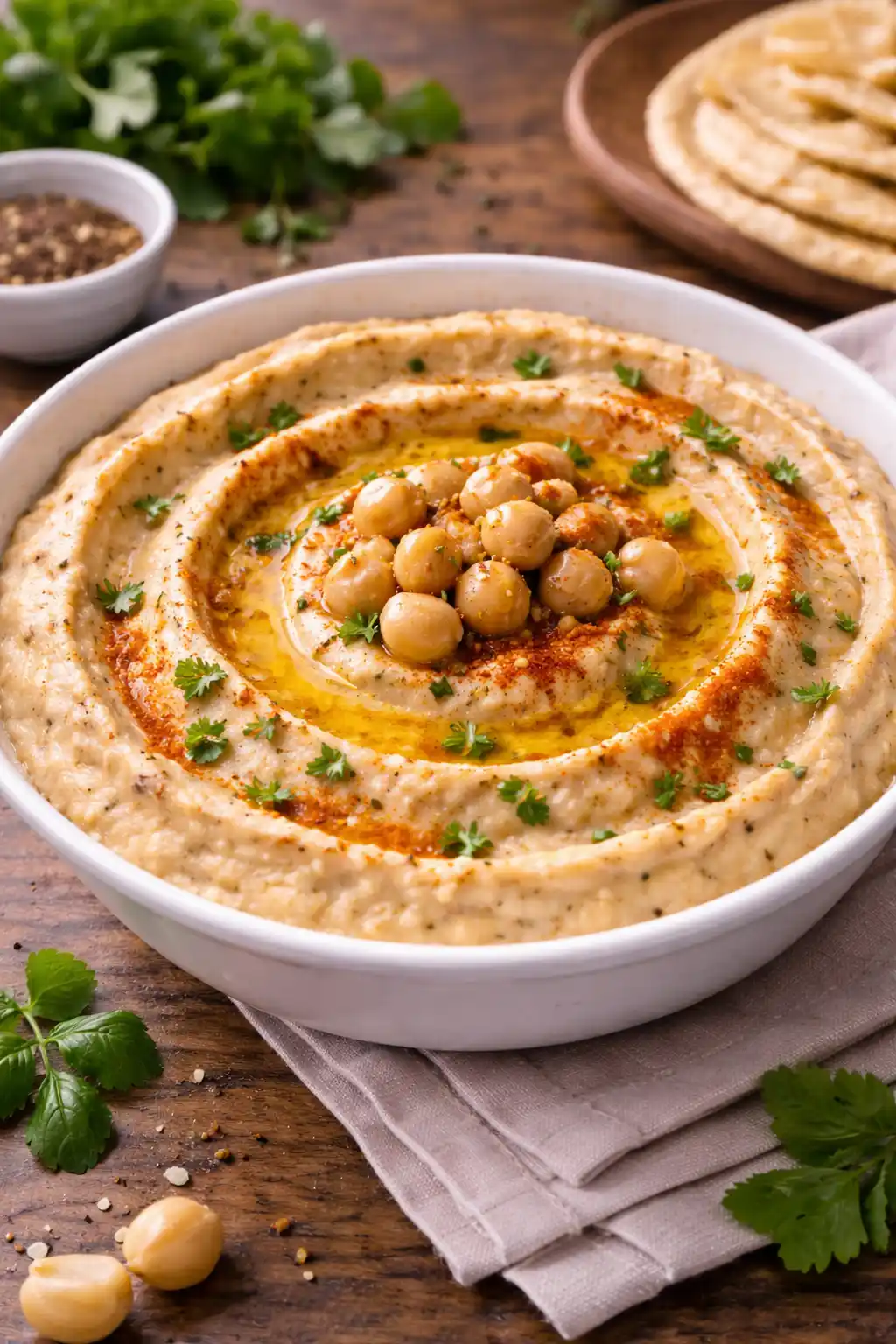
Take the hummus out of the refrigerator 10 minutes before serving. Spread it on a flat plate, making a small well in the center with the back of a spoon.
Season generously: pour a good amount of extra virgin olive oil in the center, sprinkle with paprika, a few parsley leaves and place some whole chickpeas on top.
Acompaña con pan de pita caliente.
Key tips for success with the recipe
Quality tahini is the heart of hummus. Not all tahinis are created equal. Look for one made from 100% toasted sesame seeds, with no added oils or extra ingredients. A good tahini should have a smooth, fluid texture and a rich, nutty, not bitter, flavor. It's the ingredient that distinguishes mediocre hummus from extraordinary hummus.
The texture is achieved with cold liquid and patience. Hummus's characteristic creaminess isn't magic, it's emulsion. The chickpea cooking water (or the liquid from the can) contains starches that help bind it. Add it gradually with the food processor running, letting it work for several minutes until the mixture becomes pale, airy, and silky.
Garlic and lemon should be balanced, not overpowering. Authentic hummus should have a mild garlicky base and a bright acidity, but neither should mask the subtle flavor of the sesame and chickpeas. Start with 1 clove of garlic and half a lemon, and taste as you go until you find your perfect balance.
Don't skimp on resting time. Freshly made hummus can be a bit strong in flavor. Resting it in the refrigerator for at least 30 minutes (or even up to 24 hours) allows the flavors to meld, soften, and develop their true character. Take it out 10-15 minutes before serving to allow it to come to room temperature.
The final touch is part of the tradition. Hummus is never served "naked." The generous drizzle of extra virgin olive oil in the center isn't just decoration; it's an essential ingredient that adds richness and flavor. Paprika and parsley add color and an aromatic contrast.
So, with this, you now have hummus just like the one I learned to make at home. Here's a secret: if you let it rest in the refrigerator for a few hours before serving, the flavors meld and it's even tastier. Sometimes I make it the day before, and then I just have to take it out and season it.
Another thing that's worked for me is saving the water from cooking the chickpeas. That water is a treasure. If you see that the mixture is too thick, you add a little and it thins out, thinning out, until it reaches that texture we all love.
By the way, if you don't have tahini, some people make it with ground toasted sesame seeds and a little oil. I tried it once and it wasn't bad, but since I bought the jar, I haven't changed.
Tell me, did you try making homemade hummus? How was the texture? Did you add cumin or keep it plain? Do you serve it with pita bread or a baguette, like I do? The first time I made it, my grandchildren ate it with carrot sticks and even asked for seconds.
Leave me a comment, tell me about your experience, your tips, and even share your photos if you'd like. And if you enjoyed the recipe, please share it with anyone you think deserves to discover that chickpeas can taste like this too.

I grew up watching the wooden spoon being moved in steaming pots, learning that good things take time and that the secret of a good dish lies in the love with which it is prepared.
Antonio Ruiz
Las Recetas del abuelo







Don't miss any recipes!
Join thousands of grandpa's recipes subscribers and receive our best recipes every week!
Leave a Reply