
11 de January de 2026 //
Andalusian Gazpacho Recipe

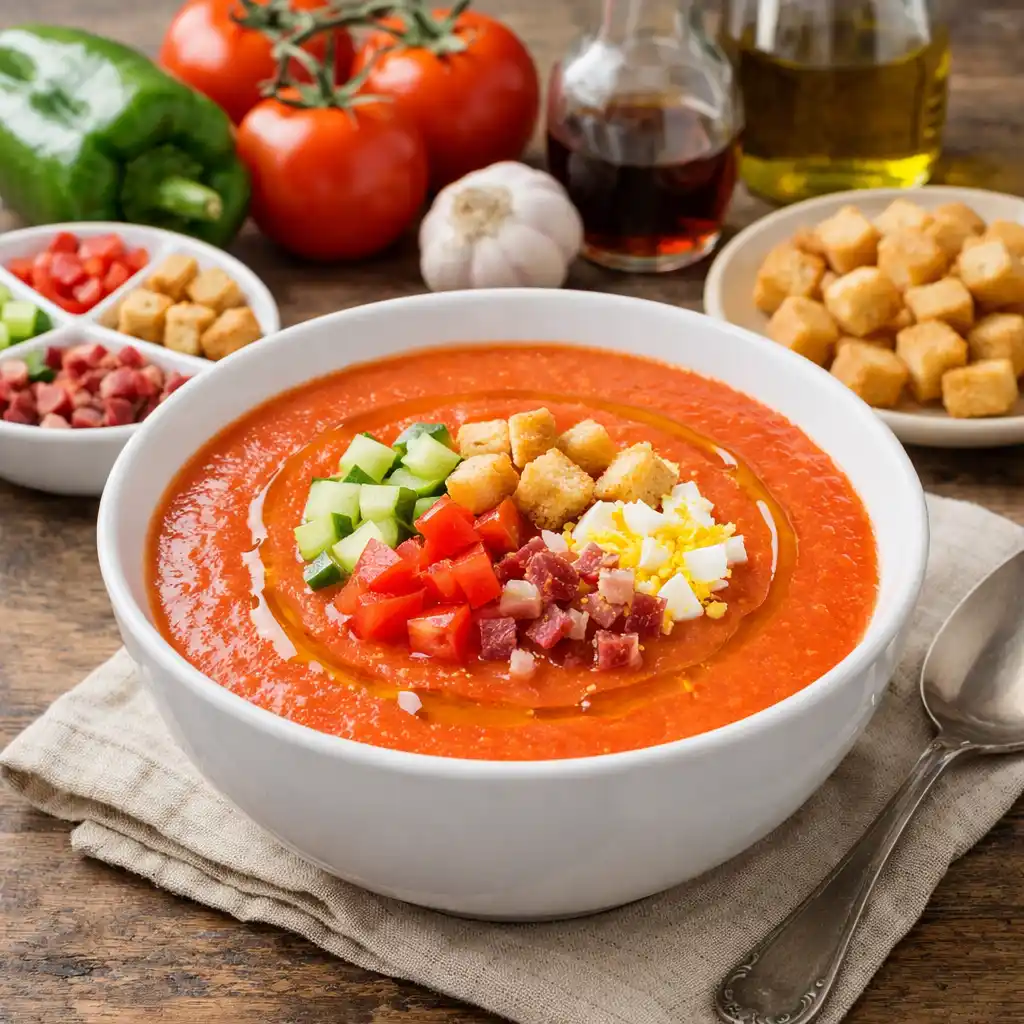
You see, gazpacho is much more than just a cold soup. It's a refreshing drink that cools you down. Farmers used to drink it to get through long days, and that's how this gazpacho recipe, so typical of our region, originated. With the discovery of America came tomatoes and peppers, and that really took off.
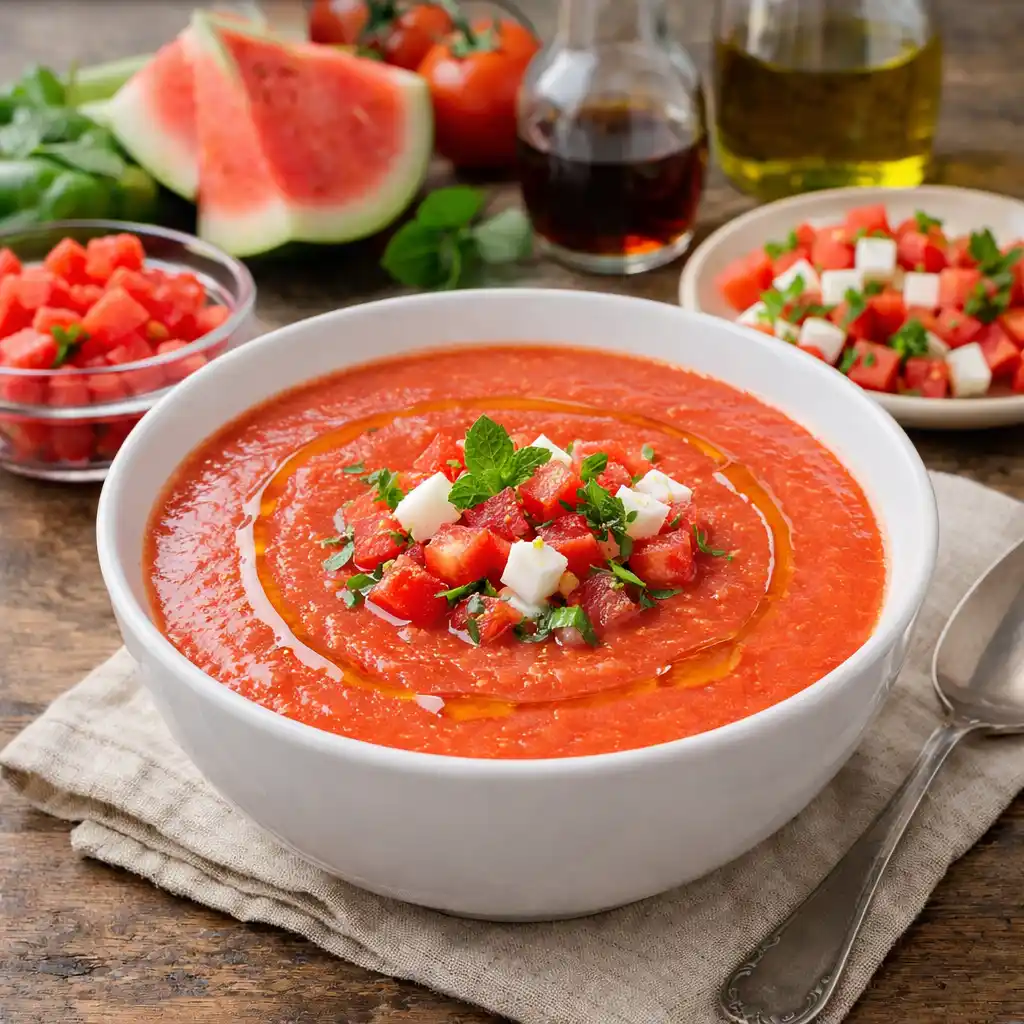
Now, making gazpacho at home is incredibly easy: cucumber, bell pepper, tomato, garlic, oil, vinegar, and salt. That's it. And with that, you have the best of the Mediterranean diet. But don't get me wrong. I've also shown you how to make that watermelon gazpacho I tried with my grandchildren at the Habitus Restaurant. That one is more modern, innovative, and also delicious. But the classic Andalusian gazpacho… that's the king, the traditional one, the one my mother used to make in those glass jugs.
So now you know: when summer arrives, gazpacho reigns supreme! The classic kind or with watermelon, whichever you prefer. Refresh yourself with a nice glass of this wonderful drink!
Andalusian Gazpacho Grandma's Recipe (4-6 servings)
Diners
4 - 6 raciones
Preparation
20m
Cooked
2 hours of cold resting
Total Time
2h 20m
Utensils
Gazpacho Ingredients
Recipe steps
1
Prepare the ingredients
Wash all the vegetables thoroughly. Remove the stems from the tomatoes and peel them (it's easier if you blanch them for 30 seconds in boiling water). Remove the seeds and white parts from the bell pepper. Peel the cucumber and the garlic clove. Cut everything into large chunks to make blending easier.
2
Soak the bread
Crumble the bread and place it in a bowl with a little water. Let it soak for a few minutes until it softens, then squeeze out the excess water with your hands. This step is key to giving the gazpacho body.
3
Crush
Place the tomatoes, bell pepper, cucumber, garlic, and drained bread in the blender. Add the salt and vinegar. Blend on medium-high speed until you obtain a smooth paste.
4
Emulsify with the oil
With the blender still running, pour the olive oil in a thin, steady stream. This is crucial for the gazpacho to emulsify, become creamy, and not curdle.
5
Strain and adjust
Pass the mixture through a fine sieve or chinois, pressing with a spoon or spatula. This step, although optional, is the secret to a smooth, professional-quality gazpacho. Gradually add cold water until you reach the desired consistency (thicker like cream or thinner for drinking).
6
Chill and serve
Pour the gazpacho into a pitcher and refrigerate for at least 2 hours (ideally overnight). Serve chilled, accompanied by a garnish of diced cucumber, bell pepper, onion, and croutons.
Key tips for success with the recipe
Order of blending and emulsifying: First, blend the vegetables with the salt and vinegar. Then, with the blender running, add the oil in a thin, steady stream. This creates a stable emulsion (like mayonnaise) that gives a creamy texture and prevents separation.
The straining is the professional secret: Passing the gazpacho through a fine sieve or chinois removes skins and seeds, resulting in a silky and elegant texture. It's the step that distinguishes homemade gazpacho from one from a restaurant.
Be careful with the water: Add the cold water little by little and at the end, only to adjust the texture to your liking. It's better if it's somewhat thick after straining, as you can always thin it out later.
Required chilling: Chill for at least 2 hours, but ideally overnight. This chilling allows all the flavors to blend and harmonize perfectly, making it much tastier the next day.
Your homemade Andalusian Gazpacho is ready, chilled in the fridge, and ready to go. When the heat hits, when you sit down to a hot meal and can't eat another bite, remember this treasure. It's pure health, pure flavor, pure life.
It's the best way to eat your vegetables without even realizing it. Kids drink it like it's soda, and we adults enjoy it for what it is: a refreshing hug from the earth.
Now it's your turn to tell me. How did it turn out? Did you follow the recipe exactly or did you add your own touch? Some people prefer it milder, without the garlic being too strong, while others like it to have a little kick in their throat. I'm definitely in the latter camp, ha! And the cucumber… peel or no peel? That's a whole other debate.
Tell me in the comments; I love to hear about your cooking habits. And if you enjoyed this recipe, please share it with whomever you like. Sharing is caring, and gazpacho is made to be enjoyed in good company.

I grew up watching the wooden spoon being moved in steaming pots, learning that good things take time and that the secret of a good dish lies in the love with which it is prepared.
Antonio Ruiz
Las Recetas del abuelo




Don't miss any recipes!
Join thousands of grandpa's recipes subscribers and receive our best recipes every week!
Leave a Reply