
April 22, 2026 //
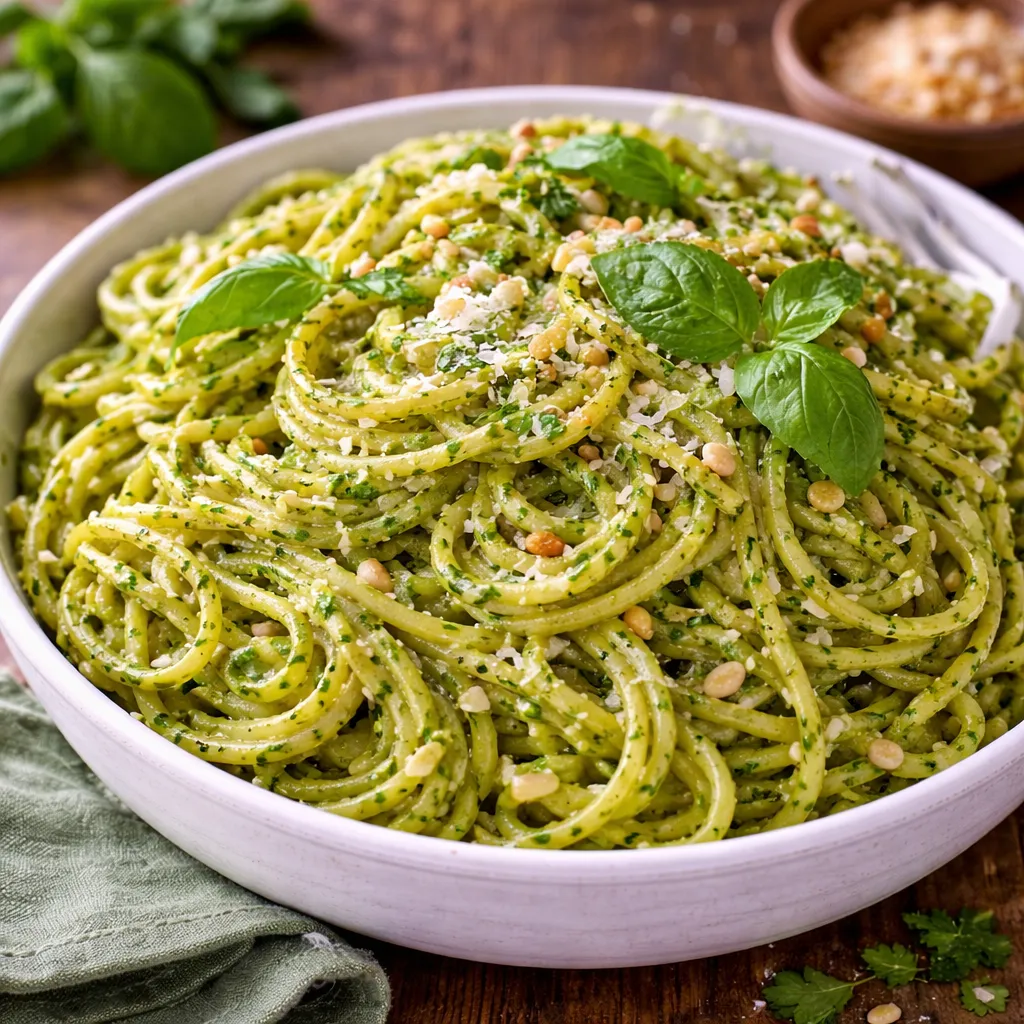
Spaghetti with pesto Recipe

I confess that for many years pesto intimidated me. The idea of mixing basil, pine nuts, garlic, and raw cheese seemed strange. But one day, on a trip to Italy with my neighborhood friends, a waiter brought us a platter of spaghetti with pesto (though they called it trenette there) and a green sauce that smelled heavenly. I asked what it was, and he said, "Pesto alla Genovese, signore." I tasted it, and wow! The pasta was perfect, the sauce creamy, with that intense basil flavor that wasn't overpowering. I asked him for the recipe, and between gestures and half-spoken words, I learned it. I've made that pesto pasta hundreds of times since. Now, at home, spaghetti with pesto sauce reigns supreme on hot days when you don't feel like cooking for long. My grandchildren ask for it every time they see fresh basil at the market.
This dish is eaten all over Italy, but especially in the Liguria region, where it originated. There, it's served with trofie or trenette pasta, but at home I use spaghetti, which is what I always have on hand. It's perfect for a quick weeknight lunch, a light summer dinner, or to take to the beach in a container. At my house, we make it when the basil from the garden is at its peak, and it's always a hit. The best part is that it doesn't need to be cooked (only the pasta) and it's done in the time it takes for the water to boil.
Spaghetti with Pesto Recipe (4 people)
Diners
4 people
Preparation
10m
Cooked
10m
Total Time
20m
Utensils
Ingredients Spaghetti with pesto
For the pesto (traditional mortar and pestle version):
For the pasta:
Recipe steps
1
Prepare the basil
Wash the basil leaves and dry them thoroughly with paper towels. It's important that they are completely dry, otherwise the pesto will oxidize and turn dark. Set aside.
2
Prepare the mortar
If using a mortar and pestle, place the peeled garlic clove in it with a pinch of coarse salt. Crush until it forms a paste. Add the pine nuts and crush again. Gradually incorporate the basil leaves, pressing them against the sides of the mortar, not just crushing them. The basil should release its essence. Once you have a green paste, add the grated cheeses and mix. Finally, slowly drizzle in the olive oil, stirring with the pestle or a wooden spoon until emulsified.
3
Version with mixer (faster)
If you don't have a mortar and pestle or you're feeling lazy, you can use a blender. Put the basil, garlic, pine nuts, cheeses, and a pinch of salt in the blender. Blend for a few seconds. Gradually add the oil while blending until you have a smooth paste. Don't over-blend, as the heat can make the basil bitter. A mortar and pestle gives a better texture, but a blender will do in a pinch.
4
Cook the pasta
Bring a large pot of water to a boil with a handful of salt. Once boiling, add the spaghetti and cook according to the package instructions, until al dente. Drain the pasta, but reserve a cup of the cooking water.
5
Mix
In a large bowl (or directly in the pot), add the pesto. Add the drained spaghetti and a couple of tablespoons of the cooking water. Mix well so the sauce coats the pasta. If it seems too thick, add a little more cooking water. The water helps emulsify the sauce and makes the pesto creamy.
Serve immediately, sprinkled with a little more grated Parmesan cheese if desired. Garnish with a fresh basil leaf.
Key tips for success with the recipe
Use fresh, dried basil; wet basil oxidizes and the pesto turns dark. Dry it thoroughly with paper towels or a salad spinner.
A mortar and pestle is better; a blender heats the leaves and can make the pesto bitter. If you do use a blender, use short pulses and don't overheat it.
Don't heat the pesto; pesto is eaten raw, never cooked. The heat from the cooking water is enough to warm it.
It freezes perfectly; pesto freezes beautifully. Make a large batch, put it in an ice cube tray, and you'll have ready-to-use portions.
If pine nuts are expensive, you can substitute walnuts, almonds, or hazelnuts. The flavor will change slightly, but it will still be delicious.
Use mild olive oil; don't use a very strong or bitter oil. A mild, fruity one is the best match for basil.
Look, this is how you make spaghetti with pesto that's just as good as any you'd find in Italy. The first time I made it at home, I used a blender and the pesto turned out a little bitter. Then I learned how to use a mortar and pestle, and the difference is huge. My grandchildren call it "green pasta," and they ask for it every time they see basil in the garden. If you decide to make it, let me know how it turns out!
Did you use a mortar and pestle or a blender? Did you add pine nuts or substitute them with walnuts? At my house, we sometimes add some grilled chicken strips, and it makes a complete meal. And if you liked it, share the recipe with anyone you think deserves a pasta dish that tastes like summer and Italy.

I grew up watching the wooden spoon being moved in steaming pots, learning that good things take time and that the secret of a good dish lies in the love with which it is prepared.
Antonio Ruiz
Las Recetas del abuelo





Don't miss any recipes!
Join thousands of grandpa's recipes subscribers and receive our best recipes every week!
Leave a Reply