
January 17, 2026 //
Asturian bean stew (fabada asturiana) Recipe

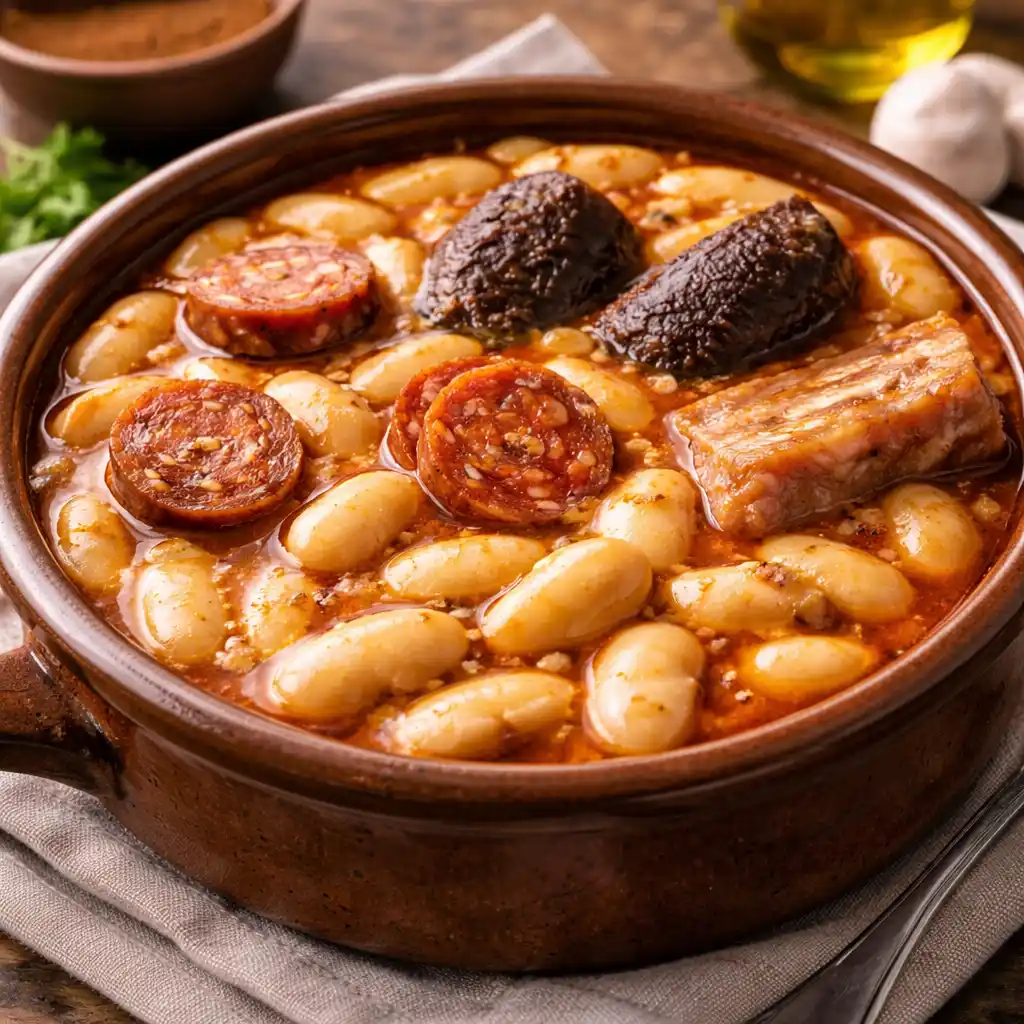
Asturian fabada is much more than just beans with meat. It's the quintessential dish of Asturias, the one they proudly represent wherever they go. And mind you, I'm not from Asturias, but when I taste a good fabada, I feel like I'm in one of those verdant northern villages, with the fog rolling down the mountains and the cold air that makes you crave a hearty stew. This is Asturian fabada, the traditional recipe, just like we've always known.
This dish originated in humble kitchens, like so many good dishes from our region. People in the north needed something to warm both body and soul. From those simple, traditional stews, it evolved into what it is today: a celebratory dish, a Sunday meal, a family gathering around the table. And in my house, my homemade fabada is always a hit.
The key here is the beans, the real deal, the authentic beans for fabada, the good kind, the genuine ones, with that incredibly thin skin you can barely see and that buttery texture. And then there's the compango: the blood sausage, the chorizo, the bacon… Each one contributes its own flavor, and together they make that dark, rich broth that makes you want to mop up every last drop of liquid with bread.
Making a fabada isn't a quick process. You have to soak the beans overnight, gently. Then, cook them over a very low heat, barely stirring. Meanwhile, the house fills with that old-fashioned stew aroma, the kind that tells you something good is coming.
When it's ready, it's served piping hot in a deep bowl and eaten with a large spoon. And the best part is sharing it straight from the pot, each person helping themselves as much as they like, while it's cold outside and inside there's only the warmth of home.
Asturian Beanada Traditional Recipe (6 people)
Dinerss
6 people
Preparation
12h
Cooked
3-4h
Total Time
15h
Utensils
Asturian Bean Stew Ingredients
Recipe steps
1
The night before (Essential preparation)
Soak the beans in a large bowl with plenty of cold water (at least 8 cm above the beans). Leave them for 12 hours.
Separately, soak the ham hock and the cured bacon or pancetta in water to desalinate.
2
The next day (Start of cooking)
Drain the beans from the soaking water. Do not rinse them. Place them in the large pot.
Add the whole peeled onion and cover with cold water until it's about two fingers above the beans.
Bring to a boil over high heat.
3
Primer hervor y "asustado"
Cuando rompa a hervir, aparecerá una espuma. Retírala con la espumadera.
"Asusta" las fabes: Vierte un vaso de agua fría para cortar el hervor. Esto ayuda a que la piel de las fabes no se rompa durante la cocción. Repite este proceso un total de 2-3 veces en los primeros minutos.
4
Add the chorizo and slow cook.
After the first shock, add the compango (ham hock, bacon, ham bone) and the whole sausages. Also add the saffron, crushed and dissolved in a little of the broth.
Turn the heat down to the lowest setting so the broth is barely bubbling (a gentle simmer). Cover and let it cook for at least 2 hours, preferably 3, always over very low heat.
Don't stir them with a spoon. To mix, simply hold the saucepan by the handles and give it a few gentle circular motions.
Make sure the beans are always covered with liquid. If necessary, add only hot water, never cold, in small amounts.
5
The end and rest
Try them after 2 hours. The beans should be tender, with the skin intact but the inside creamy, "about to burst".
Season with salt only at this point, and very carefully, because the meat will have already released salt into the broth.
Turn off the heat and let the stew rest, covered, for at least 30 minutes. This allows the broth to thicken slightly and the flavors to meld.
Key tips for success with the recipe
Use quality Asturian beans and soak them for 12 hours: Asturian beans are unique. Soaking hydrates them for homogeneous and tender cooking.
Add salt ONLY at the end of cooking: Salt hardens the skin of the bean and can prevent it from softening properly.
Always cook over low heat: Violent boiling breaks the beans and clouds the broth.
"Scare" the beans at the beginning with cold water: The sudden change in temperature helps the skin tighten and prevents cracking.
Never stir with a spoon. Use gentle movements of the pot: The beans are delicate and break easily, releasing starch that thickens the broth too much.
Prepare the fabada a day in advance: Resting (even overnight) allows the flavors to meld beautifully and the fat to be easily removed from the surface.
And there you have it. The fabada in all its glory, steaming hot and with that color that only hours of loving care can give. Serve it in deep bowls, the real kind, the kind that are big and warm your hands. And the compango, best on a separate platter, so everyone can help themselves to what they like: a piece of morcilla, a chunk of chorizo, that melt-in-your-mouth bacon…
My advice is not to rush. Let it rest for a while, so the flavors can meld. And if you have any left over for the next day, even better. These stews are like fine wine; they improve with time. It always happens to me: the fabada tastes even better the second day. I open the fridge, see it there in its pot, and I know lunch is going to be a hearty, comforting meal followed by a nap.
Tell me, did you finally give it a try? Did you stick to the timings or were you one of the impatient ones? Did your broth turn out just right, not too thin and not too thick? I want to know everything. If you have any questions, if you added your own touch, if the beans were tender… we're here to answer them.
And if you know someone who deserves a hot meal on a cold day, pass this recipe along. Asturian cuisine is meant to be shared, like all good things.

I grew up watching the wooden spoon being moved in steaming pots, learning that good things take time and that the secret of a good dish lies in the love with which it is prepared.
Antonio Ruiz
Las Recetas del abuelo
Don't miss any recipes!
Join thousands of grandpa's recipes subscribers and receive our best recipes every week!




Leave a Reply