
January 10, 2026 //
Manchego ratatouille Recipe

Pisto has a long, long history. It was invented by farm workers, those who spent all day in the sun. They would take what the garden yielded and cook it in a pan. That's how this humble yet delicious dish was born. Its ancestor was alboronía, a stew already being made by the Arabs. And then, with the addition of tomatoes and peppers from the Americas, the recipe was refined until it became what we know today as the original pisto recipe.
And listen, there's no single, official recipe for Manchego-style ratatouille. Not at all! Every household has its own, every town, every grandmother. They're all different, and they're all good. What I can tell you is that the ratatouille I make at home has a base of tomato, bell pepper, and good quality olive oil. Then, depending on the season, I add zucchini, onion, eggplant… whatever you have in the fridge.
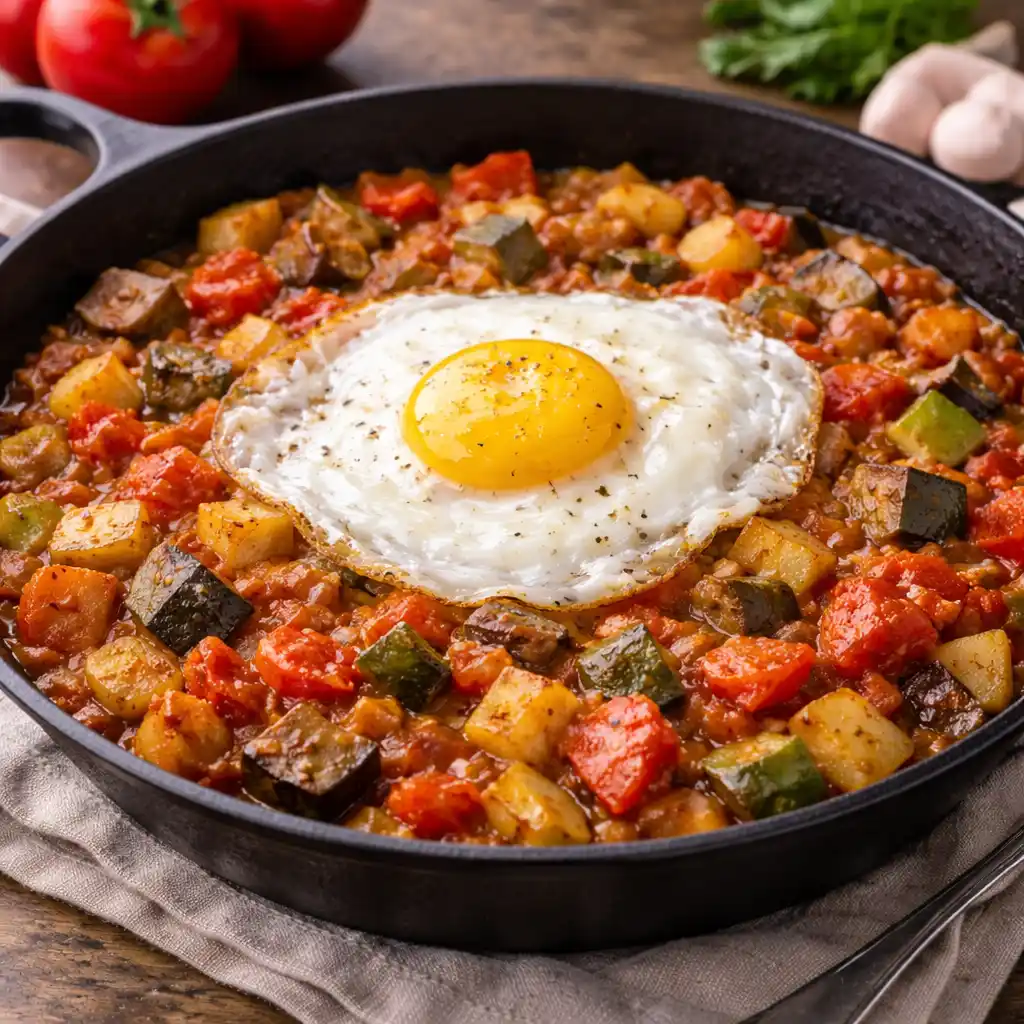
Sometimes I eat it on its own, with a fried egg on top and bread for dipping. Other times I have it as a side dish. And it always tastes like summer, like a vegetable garden, like memories of when my mother used to make it with the tomatoes my father brought home from the fields.
Pisto Original Recipe (4-6 servings)
Diners
4 - 6 raciones
Preparation
20m
Cooked
60m
Total Time
1h 20m
Utensils
Ingredients of the ratatouille
Vegetables
For the sofrito and cooking
To serve (traditional)
Recipe steps
Preparing the vegetables
1
Peel and cut
Peel and chop. Finely dice the onion and garlic. Cut the bell peppers and zucchini (with the skin on) into small, even dice, about the size of a fingernail, so they cook evenly. Set aside separately, as they cook in stages.
2
Prepare the tomato
If using fresh tomatoes, blanch them (submerge them in boiling water for 20 seconds, then in cold water) to make them easier to peel. Then crush or dice them.
Sauté and cooking
3
Sauté the onion and garlic
In a wide saucepan or deep frying pan, heat the olive oil over medium heat. Add the onion and garlic with a pinch of salt, and sauté slowly for about 15 minutes until translucent and soft.
4
Add the peppers
Add the chopped peppers and cook for another 15 minutes over low heat, stirring occasionally, until softened.
5
Add the zucchini and tomato
Add the zucchini and the crushed tomatoes. Season with salt, pepper, and a splash of white wine if using. Stir well.
6
Cook over low heat
Cover the casserole dish and let it cook over very low heat for at least 1 hour. It's important that the vegetables slowly confit in their own juices, not that they boil vigorously.
7
Reduce the sauce
After that time, uncover, turn up the heat slightly, and cook for another 10-15 minutes to allow the excess water from the tomatoes to evaporate. The ratatouille should be juicy but not watery, with tender but distinct vegetables. Taste and adjust the salt, or add a little sugar if the tomatoes are too acidic.
8
How to Serve It
Traditionally served piping hot, topped with a fried egg with a runny yolk (for a vegan version) and accompanied by plenty of crusty bread for dipping in the flavorful sauce. It's also excellent as a side dish for grilled meats, fish, or with a sprinkle of grated Manchego cheese on top.
Key tips for success with the recipe
Patience in the sofrito: It's the foundation of the flavor. Cooking the vegetables slowly and for a sufficient amount of time allows them to caramelize and concentrate their natural sugars.
Control the water: If the tomato is very watery or you use canned crushed tomatoes, the last stage of uncovering to reduce the sauce is essential to achieve the perfect, not soupy, texture.
Versatility: You can add other vegetables like eggplant (add it along with the pepper) or spices like cumin for your personal version.
And that's it. With this, your homemade Manchego ratatouille is ready to be served. A humble dish, one of those old-fashioned ones, the kind that smells of the garden and tradition. But when you taste it… oh my, nothing can beat it. It's a tribute to seasonal vegetables, to the land that feeds us, to those sun-ripened tomatoes and peppers that smell heavenly.
Now you tell me: how do you like your ratatouille best? Because everyone has their own way of doing it. Do you like it just as it is, freshly made and piping hot? Or are you one of those who crack a fried egg on top and let the yolk melt into the vegetables? That's a sin! Or do you prefer to use it as an accompaniment to a nice piece of tuna or some slices of pork loin?
Tell me, tell me, I'm very curious. Leave me a comment below and we can chat. And if you liked this recipe and think it might brighten someone's day, share it without hesitation. That's what traditional cooking is for, to be passed from mouth to mouth, from house to house.

I grew up watching the wooden spoon being moved in steaming pots, learning that good things take time and that the secret of a good dish lies in the love with which it is prepared.
Antonio Ruiz
Las Recetas del abuelo


Don't miss any recipes!
Join thousands of grandpa's recipes subscribers and receive our best recipes every week!
Leave a Reply