
January 12, 2026 //
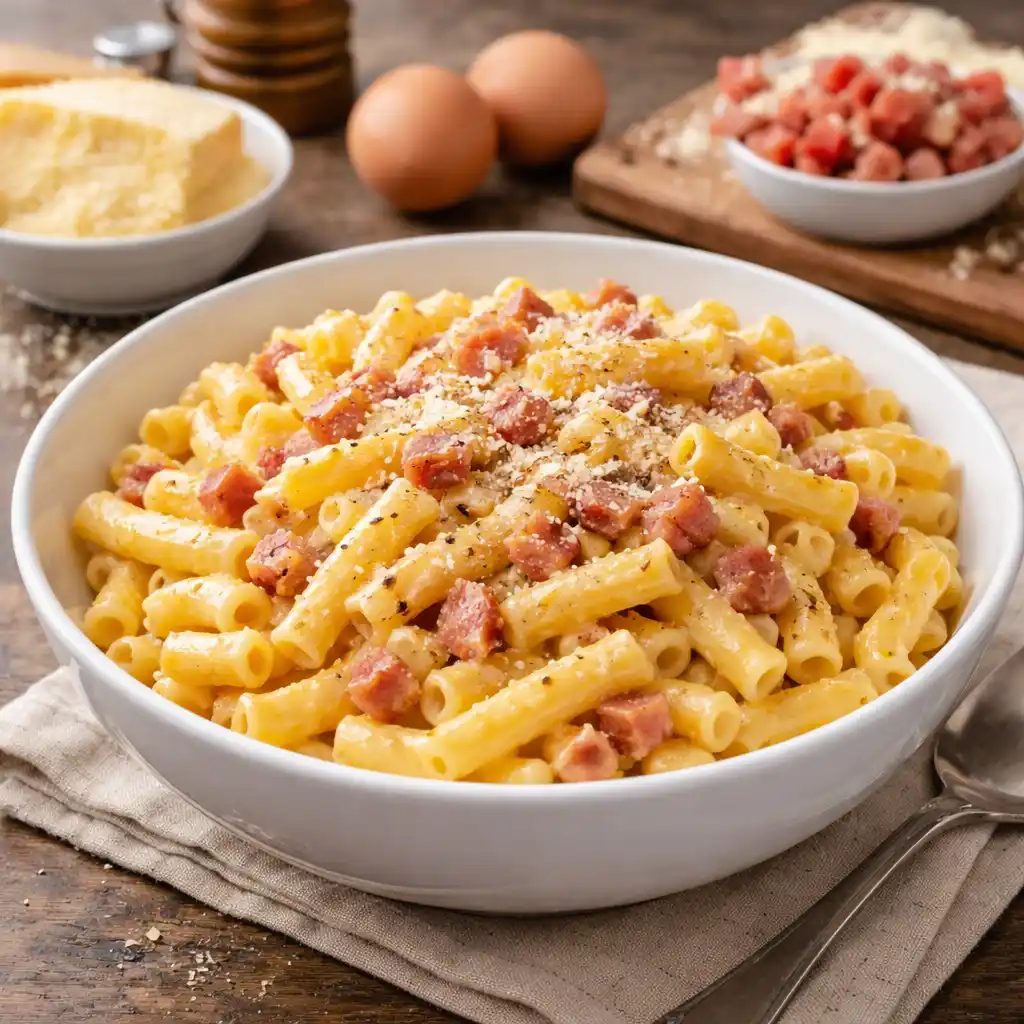
Macaroni Carbonara Recipe

This comes from Rome, from the Carbonari, the charcoal burners who worked in the mountains. Hardworking people who needed something that would give them strength and keep them going. That's why they used simple ingredients: pasta, eggs, cheese, guanciale, and pepper. That's the original recipe, the real one.
And here's the important part: authentic carbonara doesn't have cream. No, no, and no. That's what macaroni carbonara with cream is, a modern invention, but it's not the same. The real thing is macaroni carbonara made with only those four ingredients. The magic is how the beaten eggs with cheese, when mixed with the hot pasta and the fat from the guanciale, become a smooth cream that coats each macaroni. That's pure technique, pure know-how.
If you want to try the carbonara of the Roman charcoal burners, forget the cream and use good ingredients. The result is worth it, I tell you.
Macaroni Carbonara recipe without cream (4 people)
Diners
4 personas
Preparation
10m
Cooked
10m
Total Time
20m
Utensils
Macaroni Carbonara Ingredients
Recipe steps
1
Prepare the ingredients
Cut the guanciale or pancetta into strips or small cubes. In a bowl, whisk together the 4 egg yolks and the whole egg. Add most of the grated Pecorino cheese (about 100g) and a generous amount of freshly ground black pepper. Mix well until you have a smooth cream. Set aside.
2
Brown the meat and cook the pasta
In a dry skillet, place the guanciale pieces over medium-low heat. Let them cook slowly until golden brown and have rendered their fat. Turn off the heat and set the skillet and its fat aside. Meanwhile, cook the pasta in well-salted water according to the package directions until al dente.
3
Emulsify the sauce
Just before draining the pasta, take 1-2 ladles of the cooking water and set them aside. Using tongs, transfer the drained pasta directly to the pan with the guanciale and its fat. Add another ladle of the reserved cooking water and stir well over very low heat or off the heat (the pan shouldn't be too hot to avoid curdling the eggs).
4
Create the cream
Remove the pan from the heat and quickly pour the egg and cheese mixture over the hot pasta. Stir vigorously and quickly, adding more cooking water if necessary, until a smooth, glossy, creamy sauce forms that coats all the pasta. The residual heat from the pasta and water will cook the eggs without turning them into an omelet.
5
Serve immediately
Serve immediately in warm dishes, sprinkling with the remaining Pecorino cheese and more freshly ground black pepper.
Key tips for success with the recipe
Of all the tips, two are critical for success:
Temperature control (Don't overcook it!): The most common mistake is overcooking the egg. The key is to use only residual heat. Once the hot pasta is mixed with the guanciale, turn off the heat, wait a few seconds, and then add the egg and cheese mixture, stirring vigorously.
Cooking water is your ally: The starch in the water is a natural emulsifier. If your sauce is too thick when you mix it, add the reserved water one tablespoon at a time until you achieve a creamy consistency that coats the pasta without being runny.
Be careful with the salt: Guanciale/pancetta and Pecorino are already salty. Taste the sauce before adding more salt to the pasta water or the final dish.
Prepare everything beforehand (Mise en place): Have the ingredients measured, the grated cheese, and the beaten eggs ready before you start cooking. Carbonara is a quick dish that doesn't leave time to prepare on the fly.
There it is, on the table, a plate of authentic Roman Carbonara. The real deal, without cream or any of that nonsense. Creamy, flavorful, with that perfect balance that makes you close your eyes when you taste it: the saltiness of the guanciale, the spiciness of the freshly ground pepper, and the robust flavor of the Pecorino cheese. It's a dish that seems unbelievable, that can taste so much with so few ingredients, isn't it?
Now tell me about your experience. How did it go? Did you follow the recipe step by step or did you add your own personal touch? The important thing is that the sauce turned out creamy, without curdling or turning into a scramble. That's the critical moment, the one that separates amateur cooks from true chefs.
If something went wrong, if you have any questions, don't be shy about asking me. I've messed up in the kitchen a thousand times, so I understand. And if it turned out amazing, I want to know too, why not!
And please, share this recipe with everyone who loves good pasta. Let people know what a real carbonara is, spread the word. Let's not be fooled by creamy sauces that make no sense.

I grew up watching the wooden spoon being moved in steaming pots, learning that good things take time and that the secret of a good dish lies in the love with which it is prepared.
Antonio Ruiz
Las Recetas del abuelo
Discover other recipes



Don't miss any recipes!
Join thousands of grandpa's recipes subscribers and receive our best recipes every week!
Leave a Reply